A practical route from cautious first jumps to controlled backflips, with the habits that made the mountain finally click.
The first run is supposed to feel awkward
My first few attempts had the same pattern: I held too long, watched Alto rotate past a safe angle, and landed on his head. The one-touch control looked so simple that I assumed I was missing a hidden trick. I was not. Alto's Adventure asks for timing and terrain reading, and both take a few runs before they become instinctive. The useful change was to stop treating distance as the immediate goal. I made each early run a small practice session with one job: land upright, collect nearby llamas, or complete one current challenge.
Run one and two: watch the hill
Before trying to flip, watch how Alto leaves different slopes. A rounded crest gives more air than a shallow bump, while a steep descent shortens the visible landing window. Let Alto jump without input several times. Notice where the board naturally points and how speed changes airtime. This sounds overly cautious, but those neutral jumps teach the baseline animation. Once you know what no input looks like, you can judge how much rotation a hold adds.
Run three: make one deliberate backflip
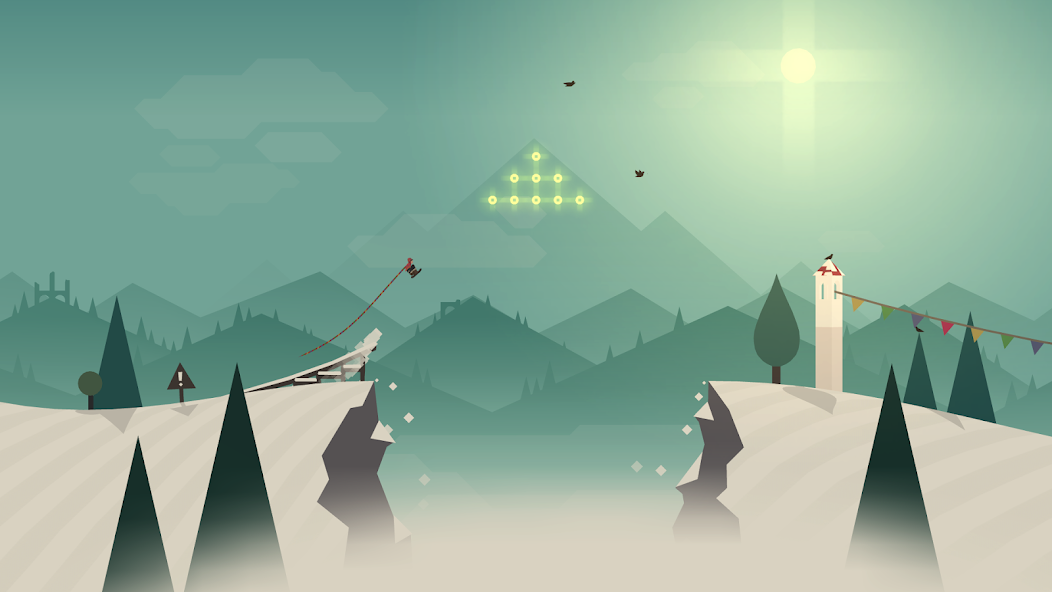
Choose a broad crest with a clear descending slope beyond it. Begin holding near takeoff, then release before Alto looks fully upright again. Rotation continues briefly, so waiting for a perfect visual alignment often means releasing too late. I started aiming to release while the board still seemed slightly behind the landing angle. The remaining motion carried it into place. One controlled flip teaches more than five desperate spins from tiny bumps.
Run four: learn to abandon a trick
A good run depends on saying no. If takeoff is low, visibility is poor, or the landing rises toward Alto, do not force the rotation. Releasing early can turn an ambitious attempt into an imperfect but survivable landing. The game rewards combinations, yet it rewards staying upright first because every future opportunity depends on the current landing. I began thinking of restraint as an active move, not a missed chance.
Run five: use challenges as lessons
The three active goals are more than a progression checklist. They point toward mechanics the game wants you to notice. Read them before starting and choose one priority. If a goal asks for llamas, follow their line rather than chasing every coin. If it asks for a backflip, preserve the run until suitable terrain appears. Trying to finish all goals at once scatters attention and usually makes basic landings worse.
Runs six and seven: connect two safe actions
Once individual jumps feel readable, look for a simple pair: a backflip followed by a grind, or a grind followed by a neutral jump. You do not need a spectacular chain. The aim is to keep awareness after the first success. I used to celebrate a flip mentally and then miss the rock immediately beyond it. Looking ahead before landing keeps the next terrain feature in the same decision.
Run eight: read speed as a resource
Clean tricks create a speed boost, and speed changes what is possible. It can carry Alto across a wide gap, but it also reduces reaction time. The bright acceleration after a landing is a signal to move your focus farther ahead. At low speed, watch the next contour. At high speed, scan beyond it. This adjustment helped me stop blaming sudden obstacles that were visible but outside my narrow attention.
Run nine: stay calm when the light changes
Sunset and night make familiar terrain feel less certain. Use the snow edge and Alto's silhouette as your closest dependable cues. Do not stare into the dark horizon hoping to identify everything early. I shorten my plans in low visibility: land the current jump, confirm the next slope, then decide. A shorter planning horizon is not timid; it matches the information the scene actually provides.
Run ten: define a successful session
By the tenth run, success should not mean a record distance. It can mean three clean flips, one completed goal, or recognizing a bad launch early enough to cancel. Those are repeatable skills, and distance follows them naturally. Alto's Adventure becomes satisfying when the control stops feeling like a command and starts feeling like a conversation with the hill. Give that conversation space, and the first mountain begins to open.
A compact practice checklist
Before takeoff, check the crest and where the ground descends. During rotation, release earlier than your anxious instinct suggests. After landing, move your eyes forward before enjoying the boost. Pick one challenge, leave marginal tricks alone, and finish each short session with one detail you understood better. That routine made my early runs calmer, longer, and far more useful than chasing a score from the start.